• 2014

    A Different Approach to the New Year

    Being January, most people are probably making resolutions for the new year. But in a few weeks most will admit with a laugh that the resolutions have fallen by the wayside. I think that happens, in part, because we set very high expectations for ourselves. When we can’t meet those expectations, we give up. However, if we can think differently about starting a new year, there is a better chance of achieving the change we’re hoping for.

    At the beginning of 2013 I listened a book by John Maxwell called 15 Invaluable Laws of Growth. “If you focus on reaching goals,” he writes, “you won’t necessarily grow. But if you focus on growth, you will always reach your goals.” Goals are only about the end result. Growth, on the other hand, is about gaining ground slowly but surely over time.

    With that in mind, last year I had five areas in which I wanted to grow: spiritual, creative, financial, health, and leadership. I then wrote down specific ways I wanted to make that happen. Out of my list of 15 ways, I did about six. I could get mad at myself for not doing the other nine, but hey—hose are six things I wouldn’t have done otherwise! And again, I’m not after just reaching goals; I’m after growing in those areas, and over the course of 2013 I did grow.

    This approach really works for me, and I hope you take some time to consider it for yourself.

    Areas I want to grow in 2014

    Four of the five areas I focused on last year are still applicable for 2014. I’m no longer in a leadership role (at least not an official one), so that won’t be on my list. This year I want to replace that category with Others. I want to help those around me grow, in addition to myself growing spiritually, creatively, financially, and physically.

    After thinking about it for a couple weeks, here are the ways I’m going to grow in these areas:

    1. Develop a set time to hang out with Jesus daily
    2. Read the Bible daily and chronologically
    3. Write 250 words a day
    4. Finish the first draft of a novel
    5. Publish a side project
    6. Sell a short story
    7. Write and direct a short film
    8. Build my own website
    9. Learn Avid
    10. Read a screenplay a month
    11. Help one person finish a project
    12. Run 3 miles two times a week
    13. Pay off all debt
    14. Learn about investment

    I happen to turn 29 this year, so this will be my last year in the 20s! A few years ago I made a list of things I wanted to do by the time I was 30, and a few of them I have accomplished. But one of them, finishing a novel, still remains elusive, so I definitely want to focus on reaching that goal.

    Things to help the process

    Set goals that seem too low. It’s only a couple weeks into 2014, but this is the biggest thing I have learned so far. When I set my daily word count goal at 250, it felt ridiculous. Surely I could write more than that each day! What I’ve found is that is exactly the emotion you want to have with a goal. I have written 9 days out of the last 10, because even when I get home late at night and I’m tired, I think to myself, “It’s only 250 words. You can definitely do that.” The best part is, I usually end up writing a bit more than 250, so I think I’m going to increase the word count to maybe 350 at the end of the month. 

    So instead of setting a goal astronomically high and then getting depressed because you never do it, try starting small. Once you can routinely meet that small goal, like running just twice a week, try increasing it.

    Find an app that fits your goals. We nearly all have smartphones these days, and they have uses far beyond just games or Instagram. There are quite a few apps that can be really helpful in reaching daily goals. Here are a few I have found helpful:

    • YouVersion Bible. Reading the Bible daily, or the whole thing in a year has been something I’ve wanted to do for a long time. On top of that, I have really wanted to read the Bible chronologically. YouVersion has been around for a long time, but I suddenly realized they probably had that exact plan. Turns out they do! The daily reading plan function works really well, and I’ve discovered that the audio version is perfect for me. The day’s chapters fit just about perfectly into my morning drive to work. It’s been 15 days and I’ve made it through as many chapters in Genesis and all of Job (which was always a laborious chapter for me to get through). I’m excited to get into the other history books of the Bible and hear/read them all together. 
    • Habit List. Sometimes all you need to reach a goal is a friendly reminder. Habit List has a great look and makes it simple to set up reminders at whatever interval you might want. It also keeps track of how many times in a row you’ve successfully done something, which can be a good motivation to keep going. If you want to set more specific goals and keep track of things like daily numbers or averages, check out the iOS app Strides.
    • Audible. I started running last year for the first time and audio books really helped me. Audible is subscription-based and the app works really well. Another app that helps with running is RunKeeper, which tracks your running. Nike+ is also a good option, but I liked RunKeeper’s Pause button was easier to get to—which is a big deal when you’re exhausted after a run.

    If a plant isn’t watered, it won’t grow. We are no different. I encourage you to pick at least one area in your life this year and decide to grow in it. Start small, don’t stress yourself out, be patient. Remember that growth is a process.

    How do you want to grow this year?

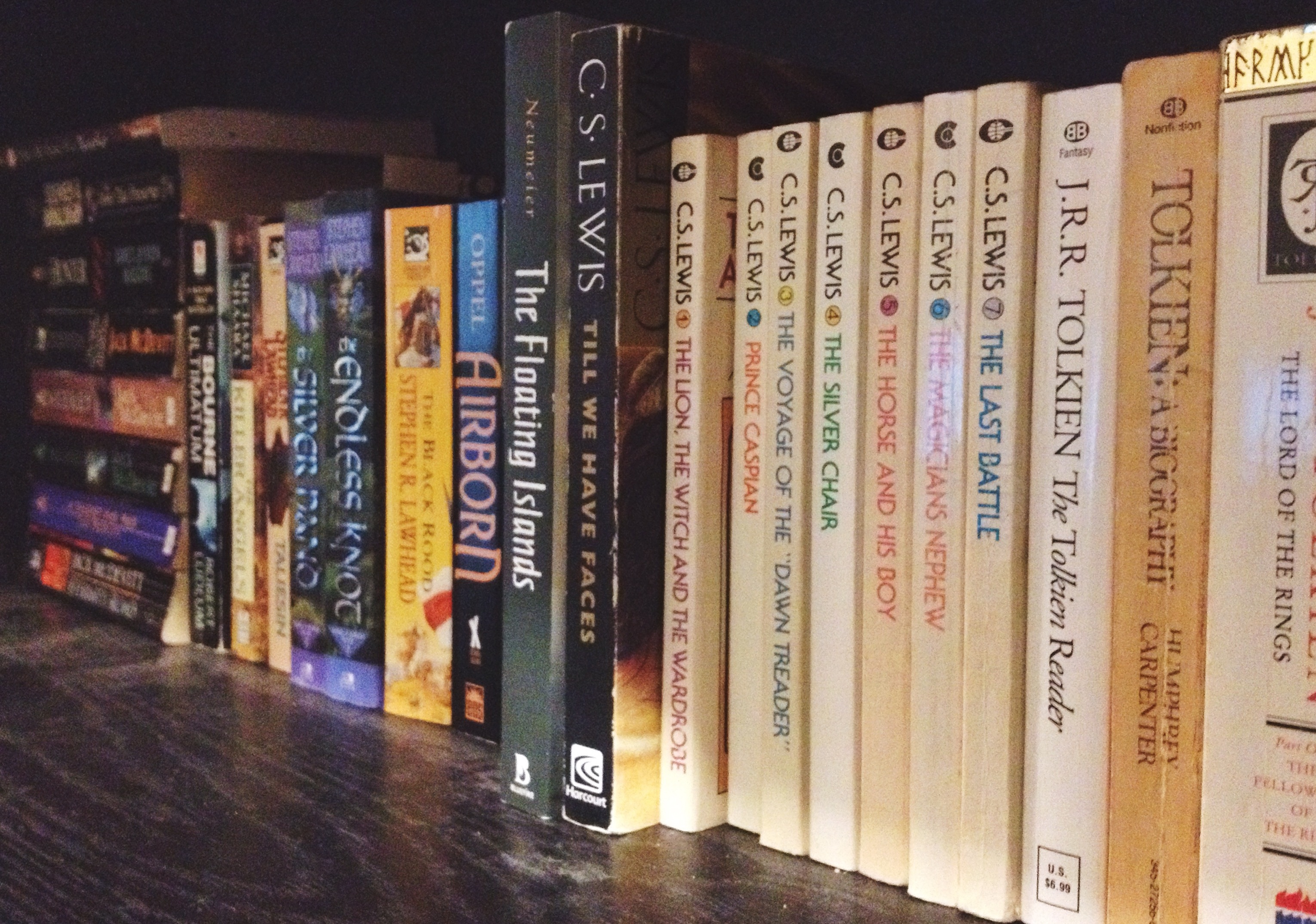
  • Photo Jan 05, 3 28 19 PMIf you’ve seen my reading lists before, you may notice that 2013 is a lot shorter. I spent ’11 and ’12 reading young adult novels, and due to their fast pacing and relative intellectual shallowness (I don’t mean that in a bad way), I could usually finish one in just a few days. I even started 2013 by reading three YA novels, but when I looked for another one to read I found myself wanting something more substantial.

    It probably sounds like I’m bashing on YA books, but I assure you, I’m not. There are good YA books and very good YA authors, and they have my respect. I simply found myself wanting steak and potatoes after eating salad for so long. That being said, I will definitely read more YA novels in the future, and there are particular authors that I grew to love who I will keep watching.

    Now on to the reading list for 2013, and after that some thoughts on the books I loved.

    Favorite Authors

    Rachel Hartman was my new favorite YA author for the year. Her debut novel Seraphina was about a world where dragons exist and can shape-shift into human form. Seraphina is a young girl who hides a secret that could threaten her life. The writing was wonderful, there was beautiful music, and the world is very well formed and thought-out. Rachel is writing a sequel, which is scheduled to be published in the far, far off year of 2015.

    I haven’t read much sci-fi over the years, but Jack McDevitt sprung out of nowhere to be an author who I expect I will enjoy for years to come. His book Eternity Road was the first adult novel I had read in quite some time, and at first the slow pace threw me off a bit. But I quickly came to appreciate how he took his time setting up the world (a new civilization grows up in the ruins of our modern day, having only overgrown highways, rusted cars, and broken skyscrapers) and how in-depth the characters were. A Talent For War was also very good, starring the re-occurring antiques dealer-turned-detective Alex Benedict. I have three more of Jack’s books waiting on the bookshelf.

    Starting in January I listened to audio books while running, and my first fiction audio book was Mistborn, by Brandon Sanderson. I went on to listen to the entire trilogy, and Brandon is an incredible author. The world he builds is so detailed and layered, from the characters use metals to give themselves powers, to the strategies and over-arcing plot in all three books. He surprisingly talked a lot about religion, even though a lot of fantasy books are devoid of organized religion. His books are long, but I plan to read more of his work.

    Books for 2014

    In the past I have tried to alternate between fiction, non-fiction (usually history), and theology books, but it’s been a while since I’ve done that. I want to get back to that in 2014.

    Kenneth Oppel has a new book coming out in April called Boundless, and anything he writes I will read. I’m sure I’ll read more Jack McDevitt, as well as possibly re-read certain books that I loved the first time around, like The Song of Albion trilogy by Stephen Lawhead or Hunter by James Bryon Huggins.

    In the non-fiction genre, there are several books on creativity and faith that are on my list, such as Heart of An Artist by Rory Noland or Walking on Water: Reflections on Faith and Art, by Madeleine L’Engle. I also have some history books about Arthur, the Celts, and Tolkien that have been sitting on my shelves for years that would be nice to finally read.

    Finally on the theology side, I’d like to read more from John Eldredge and Andrew Murray. These are often books I keep by on the nightstand and read slowly throughout the year.

    So there you have it! I hope you got some suggestions for your reading list this year. I’d love to hear what you read and liked in 2013, so leave a comment below!

  • LESSONS from a master

    There’s something about reading a good book that soaks my veins with words and inspires me to write my own stories. This was especially true when I recently finished reading the authorized biography of J.R.R. Tolkien, by Humphrey Carpenter, not only because the book was very well written but also because of seeing how Tolkien brought together the masterpiece that is The Lord of the Rings.

    Three things stood out to me:

    1. Tolkien spent decades working on his stories. It’s easy to get frustrated when something isn’t ready now, but I was reminded that patience is as important to producing a work as inspiration or skills.
    2. Though a Catholic, Tolkien didn’t force his faith into the story. It was a fundamental part of his life and how he viewed the world and thus influenced his writing, but he did not make it an explicit part of the story. Instead, he believed that by simply creating he was helping to reveal the truth of Jesus, the deeper truth (or myth, as he described it to C.S. Lewis) that all men only dare to hope is real.
    3. In all his genius and brilliance, Tolkien hampered himself by being a perfectionist. The Lord of the Rings took over ten years to publish because he would get absorbed into minute details or simply start from scratch. That is a tendency I have noticed in my own writing and it makes finishing a project really hard. From now on I’m going to try to give myself more grace (while still reaching for excellence, of course).

    Some of these points were excellently covered by Trevor McMaken over at Q Ideas in a great post titled “7 Lessons for Creatives from the Life of J.R.R. Tolkien”. I highly recommend giving it a read, and also the biography itself.

    THE EXCITEMENT OF FORWARD MOVEMENT

    2013 turned out to be quite a year for me in terms of creating things. In February I started work on a short story titled Bent Heart, which I released in June as a free PDF. Also in June I directed a short film, which is still being edited (and named). I then changed jobs and took the role of marketing editor for a non-profit, which has turned into a flurry of writing, shooting, and editing multiple promo videos, a short documentary, and other content. Lastly, starting in September I published The Ways We Tell, a 13-episode podcast about how artists use different mediums to tell their stories.

    It’s probably too early to presume, but it all has led to a distinct feeling that I’m starting to get traction with the things I create. Starting projects, finishing them, and then releasing them to be seen by others provides needed steam to the creative engine. 

    So onward to 2014! If you have a project you are working on, the best way to inspire yourself is to finish it, so keep going!


  • Posting to ye ol’ blog has slowed as of late, but don’t worry, I have indeed been writing. After finishing Bent Heart (a short story you can read here), I moved on to the next short story I had outlined. The story and world has progressed well for just over 9,000 words, and I really like where it’s heading. It also seems to be growing beyond just a short story—that 9,000 words only covers 8 out of the 51 bullet points I have planned. So I work on it a little bit each day, slowly moving through the outline.

    Recently I’ve run into an issue, though. As the story has progressed, I’ve found that my original concept for how the main character would enter this world needs to be adjusted. On the one hand, that is to be expected. As you till the ground, you find that things need to shift here or there. When that happens I’ll usually make a note of it or simply inject it into the story without any foreshadowing or build-up, knowing that I’ll revise in the next draft. However, the change I’m thinking of making will have quite a large impact, on what I have and also will write.

    Thus, I find myself facing a decision: I either write from now on as if the story had always been like this, or start over and re-write all 9,000 words. The former option would keep me moving forward without potentially getting bogged down in editing, while the latter option would help build in the elements that need to be there and also make the story understandable to alpha readers.

    Not knowing what to do, I asked a few authors on Twitter, “If you’re a ways into writing a story and find a big change needs to be made, do you start over or add it in and keep going?” Below are their gracious responses.

    Brian McClellan

    BM: “I add to it and keep going. Then go back and change things later.”

    Me: “So in that draft things just show up out of nowhere, but then on revision you go back and work it in like it should be?”

    BM: “Depends on how big a change it is. Sometimes I need to go back and change things immediately, but usually I just make notes.”

    Aaron Mahnke

    AM: “I hate starting over. I do my best to go back and stitch the new element into the completed stuff.”

    Me: “What if it’s a big change? Do you take the time to make all the necessary changes?”

    AM: “It’s tough. If it’s a huge plot change, it might warrant a do-over. Depends on the depth of change. How far the roots reach.”

    Ava Jae

    “If I’m first drafting, I add it in and keep going. I make a point not to edit or revise while I’m drafting.”

    Joanna Penn

    “I add it in, but am trying to outline more before I start to prevent such big rewrites.”

    Jamie Todd Rubin

    JR: “If I am in the first draft, I generally don’t start over. I’ll make a comment or note at that point and move on.”

    Me: “What if it’s a big change that affects how you approach the story, something bigger than just a note?”

    JR: “I’m not sure; I haven’t had a change like that in quite a few years now. Usually, I’ll complete the draft. If I like the story but not the approach, I’ll just try another draft after the first one is done and see how it feels.”

    Michael J. Sullivan

    “That rarely happens (I outline) and when I change tack I know where I’m heading. But I tend to keep going and then adjust anything that needs to be as part of the first pass edit.”

    Iain Broome

    “Totally depends but lots of my novel was added later.”

    Christopher Paolini

    “I do whatever is needed to make the story work.”

    Jody Hedlund

    “I wait on little things. But if the changes affect later sections, I go back and add what I missed to keep the story cohesive.”

    First, this is a perfect example of why Twitter is great. These are all published authors, and yet with a simple tweet I was able to connect with them and get their advice. Second, all of these writers handle story changes a little differently, from Christopher’s dedication to doing anything needed, even if it means starting over; to Brian’s loose addition, to Jody’s gentle adjustment of passages already written.

    Having asked for advice, I now need to decide what will help keep me moving forward with the story and help me know what to change in the second draft. I’m leaning toward adding it in and keep writing, but I’ll need to think about it more and make sure this is the direction the story should go.

    In the meantime, I’ll just keep plugging away at the outline. The overall structure may change, but I know the basic plot and direction, so I can keep writing. This is the second story I’ve fully outlined before starting, and so far it’s been a helpful thing to have.

  • Earlier this year, while deep in the throes of trying to write a young adult novel, I decided to write a short story. Sometimes you just need to do something that’s small and can be finished.

    At the same time, I was reading Writer’s Mind, by Richard Cohen. In it he gives an exercise to write a plot in five minutes. Just start with a character and a problem and work toward an ending. So during lunch one day I sketched out a story about an old man who needs milk for his morning cereal.

    At first I tried to make the story humorous and play off old people jokes, but by the time I finished writing the first draft I discovered the real story was something much different. There would hopefully still be moments of humor, but more importantly this was the story of a man who refused to acknowledge the pain of his past.

    So I am proud to present Bent Heart. The story is just over 3,000 words long and should take about 15–20 minutes to read. Here is a short excerpt:

    The house was old, like him. Some days as he walked this hallway the walls seemed to lean inward, tired after so many years. He had hoped that removing thepictures would lighten their load, but somehow the hallway only felt smaller. Rectangle stains marked the empty location of pictures like headstones.

    He stopped to straighten one of the two photos still on the wall. Emily smiled back at him, those faint dimples in her cheeks peeking out.

    These walls could be repainted. They should be repainted.

    A soft tolling of bells in the living room noted the time as half to the hour. Roger put his back to the dimples and graves and made for the front door.

    Click HERE to read the PDF in your internet browser. It has also been formatted for smartphones (iPhone in particular), so if you open the link on your phone and have Amazon Kindle or iBooks installed, you’ll see an option to open it there.

    Thanks for reading and I hope you enjoy it! I’d love to hear your thoughts in the comments below.

I’m Jesse

Reading, writing, fantasy, adventure, movies—it’s all been my favorite since I was 8 years old. If you enjoy reading fantasy, adventure fiction, and screenwriting, then you’re in the right place!

Let’s connect