The past three weeks have been a flurry of activity as I take steps to enter the world of freelance video editing. I’m not going to quit my job (my goal for now is only supplemental income, not a full-fledged career) and I haven’t been hired for any projects (yet), but over the last few weeks I’ve tried to prepare a foundation for freelancing. Part of the process was setting up a website and getting on Twitter (I’ll post about both in the future), but another big part of it was getting a good computer on which to work. At first I considered buying a new computer and Final Cut Studio 3, but a friend mentioned that all I really needed to do was upgrade my current iMac from Tiger to Snow Leopard and reinstall FCS 2. What a revolutionary idea! Not to mention it’ll save me $2,000. So here’s how I did it.
(more…)
-
-
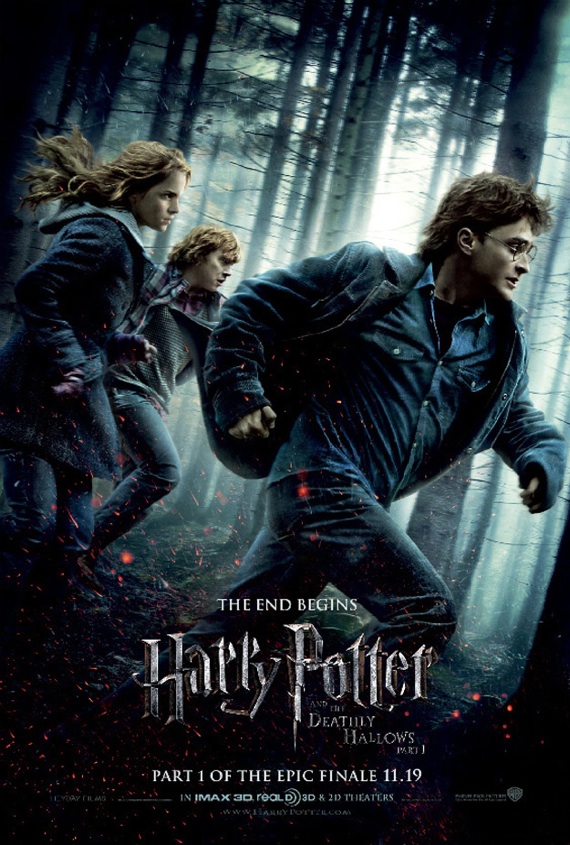
The Harry Potter film series is beginning its end with the release of Harry Potter and the Deathly Hallows: Part 1 on Friday, November 19. A cinematic journey that began in 2001, we’ve watched Harry, Ron, and Hermione grow up and battle evil for almost ten years. Well, I should say, some of us have watched them grow up. As I read Focus on the Family’s review of Part 1, I was reminded of why I stopped reading the books and watching the movies.They are just too good.
(more…) -
After editing videos for almost ten years, completing a Bachelor of Arts degree at the University of Montana in Digital Filmmaking, and working full-time as a video editor for two and a half years at the International House of Prayer in Kansas City, I’ve begun to think about freelancing.
Freelancing is a huge field about which I really don’t know anything. I’ve started reading some stuff and talking to a co-worker, and it’s pretty overwhelming. There’s a lot to consider, and a lot of hard work involved. I am most certainly not opposed to hard work, but right now, as I stand on this side of the ocean and consider the ship which I have to build, the crew I need to assemble, and the distance that lies between me and the other side, I feel myself wanting to quietly crawl back to my little room and not dare it.
But if all adventurers had succumbed to that feeling, where would we be?
(more…) -
This is a poem I wrote back in July, during the Silent Months. When my words felt like nothing. Like dust.
—
I try to write / but no words come. / I can see the end, / the goal of the trip, / but the path eludes me. / I write, but don’t feel; / I dream, but don’t see.
My dreams are immaterial / and I feel like a farmer / with a dull plow, / vainly, / tiredly, / perhaps naively, / pushing ahead.
Will you grease my wheels, Lord? / You said the oil would flow. / Here’s my broken jar, / my cracked cistern. / It’s not much to work with, I know, / but I love the words, I really do. / They just don’t flow like they should.
So touch my hands, Lord. / Breathe on my words / as you breathed on Adam. / Breathe life into these / words of dust, / that they may live. / That I may write. / That I may live.
—
Broken jar, cracked cistern. My words feel like these things. God is God, after all; nothing I bring could add to his beauty. Nothing I make will actually, in all reality look that good magneted on the fridge next to the universe.
But that’s okay. It’s okay, because I love making things, and he loves receiving them. It makes him so happy to receive what I am so happy to give.
So I bring my broken jars. “Fill them with your Spirit, Daddy,” I ask, because I know it’s what he loves to do.
-
Hello! Yes, it has been far, far too long. I’ve been meaning to post something for the last few weeks (as part of my writing schedule. I’ll explain later), but haven’t quite gotten to it yet. I’m one who likes to do things ceremoniously, which means a random post like this kind of bothers me. However, I just read an article on Wired.com called “The Future of Reading“, by Jonah Lehrer, and it got me thinking.
In the article, Lehrer talks about the rise of e-readers in the last decade. In his opinion, “the future of books is digital.” The problem he has with is the way in which digital words change the way we read.
“My problem is that consumer technology moves in a single direction: It’s constantly making it easier for us to perceive the content. This is why your TV is so high-def, and your computer monitor is so bright and clear. For the most part, this technological progress is all to the good… Nevertheless, I worry that this same impulse – making content easier and easier to see – could actually backfire with books. We will trade away understanding for perception. The words will shimmer on the screen, but the sentences will be quickly forgotten.”
Lehrer goes on to talk about a recent study that tested the way our brains work while reading. To put it as simply as I can, our brains have two distinct pathways for reading: the first, called the ventral route, involved recognizing letters, then words, and finally meaning in rapid succession; the second, called the dorsal stream, is used when we have to slow down and actually decipher the words, “perhaps because of an obscure word, or an awkward subclause, or bad handwriting.” We use the ventral route most times, but occasionally we have to use the dorsal stream when readings things such as James Joyce’s Finnegan’s Wake or Ulysses. Instead of glancing at the words and grabbing the meaning as we clip along, we have to stop and decipher and think about the words.
Lehrer’s point is that the whole goal of e-readers is to make the reading process easier, thus removing any need for the dorsal stream. “I worry that, before long, we’ll become so used to the mindless clarity of e-ink – to these screens that keep on getting better – that the technology will feedback onto the content, making us less willing to endure harder texts. We’ll forget what it’s like to flex those dorsal muscles, to consciously decipher a literate clause. And that would be a shame, because not every sentence should be easy to read.”
It’s a very interesting point, especially in our digital age. The common way to absorb information these days is through video. When we are skimming through a newspaper site, we are (or at least I am) more inclined to watch the video which summarizes the content than we are to read the article itself. If I were to post an entertaining video instead of this blog, people would be more inclined to give time to it. When it comes to reading books, then, we don’t want to take the time to think about the subject. We just want the information so we can get on with things. Think about: how many of you watched the movie version of Oliver Twist in high school instead of reading it?
The big question is, are we actually reading more? The Wall Street Journal published an article just last month about “The ABCs of E-Reading” and stated that a study of 1,200 e-reader owners found that 40% of them read more now that they have an e-reader. But does reading a digital copy of a book actually make the process that much easier? True, you don’t have to carry around the physical bulk of a paperback, but other than that, what’s the difference? In regards to the quantity of books we have on hand (the latest Kindle holds up to 3,500 books), do we read more than one, maybe two or three, books at a time?
How does reading on a Kindle change the experience compared to a hard copy? It doesn’t, really. It’s sleek, popular, and trendy, but for the average person (i.e., not a person who rides the subway and has to fit everything into an impossibly thin sidebag) the gains aren’t actually that much.
Yet Lehrer asserts:
“The future of books is digital… I imagine the physical version of books will soon assume a cultural place analogous to that of FM radio. Although the radio is always there (and isn’t that nice?), I really only use it when I’m stuck in a rental car and forgot my auxilliary input cord. The rest of the time I’m relying on shuffle and podcasts.”
The group Lehrer forgets is Children. This is my main thought about digital books. Who generally does the most reading? Children do, because they have the least amount of responsibilities. As adults get older, we have to fight for and make time for reading. When I used to come home after school as a kid, I’d plop down on my bed and read until supper time. Now I come home from work at supper time, and then after supper there’s dishes to do and bills to balance and other projects around the house, and maybe, if I push something off, I can spare twenty minutes to read. Adults still read, but it’s children that read the most.
For digital books to replace hard copies at large, they must reach the children. But this isn’t practical. It costs too much to buy an e-reader for a whole third grade class, let alone a whole nation of third-graders. In order for digital books to replace hard copies, they must become so inexpensive and ubiquitous that even the inner city below-poverty child can have access to one. I doubt this will ever happen.
If e-readers become the dominate form of publication, it will be at the expense of children. Of course adults with e-readers will read more; most adults don’t have time to go to the library and find new books to read. Having a device in hand to help them search while being out-and-about will certainly increase their amount of reading. And for that purpose, e-readers are a great tool. But if we take the rise in percentage to mean hard copies can become a thing of the past, children across the country will lose their chances to read.
And if children do not read, where will the world be?
(If you’re still reading this post, congratulations. Here’s to the written word, in whatever form.)
P.S. A further complication to this issue is sustainability. Let’s suppose that e-readers were distributed to all young children in school. What are the requirements for them to read books on an e-reader? First and foremost, they must be literate. Second, they must have access to electricity in order to charge their e-readers. Third, they must also have access to WiFi or some other computer (which would likewise need a connection to the internet) in order to download books onto their e-readers. In the U.S. these things are almost a given; you’d be hard pressed to find anyone without access to an outlet, computer, or form of internet connection. But these things are not so common as to be completely taken for granted, not in the U.S. and certainly not in the rest of the world.
In contrast, what requirements are there for printed books? Again, first is literacy. Second, a printed copy of the book. That is all. Literacy and the book. While electricity is often readily available, it is not always, and internet connectivity, particularly in places outside of the developed world, is even less available.
Therefore I say that regardless of the popularity and pervasiveness of e-readers, there will always be those who need printed books. To say “The future of books is digital” is to speak a death sentence for reading in any place besides modern, metropolitan areas. E-readers should not overtake the literary market, but should instead be set in their proper place alongside the many other tools of information consumption.